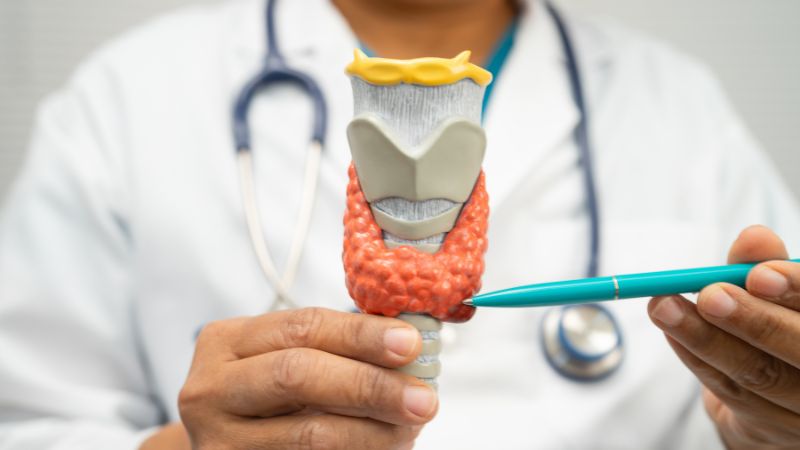
Thyroid surgery is a procedure performed to treat disorders of the thyroid gland, a butterfly-shaped gland located in the front of the neck. The thyroid plays an important role in regulating metabolism, energy levels, and hormone balance. Surgery may be recommended when there are thyroid nodules, goiter, hyperthyroidism, or suspected or confirmed thyroid cancer.
Our experienced surgeons use advanced and safe surgical techniques to ensure effective treatment with minimal complications and faster recovery.
Conditions That May Require Thyroid Surgery:
Thyroid surgery may be recommended for the treatment of:
- Thyroid nodules (benign or suspicious)
- Thyroid cancer
- Large goiter causing breathing or swallowing difficulty
- Hyperthyroidism not controlled with medications
- Multinodular goiter
- Thyroid cysts
- Cosmetic concerns due to enlarged thyroid gland
Our specialists perform detailed evaluation including ultrasound, blood tests, and biopsy if required before recommending surgery.
Types of Thyroid Surgery:
Depending on the condition, different thyroid surgeries may be performed:
- Thyroid Lobectomy: Removal of one side (lobe) of the thyroid gland.
- Total Thyroidectomy: Removal of the entire thyroid gland.
- Partial Thyroidectomy: Removal of a portion of the thyroid gland.
- Completion Thyroidectomy: Removal of remaining thyroid tissue after initial surgery.
The choice of procedure depends on the diagnosis, size of the thyroid enlargement, and overall patient health.
Benefits of Thyroid Surgery:
- Effective treatment of thyroid cancer
- Relief from breathing and swallowing difficulties
- Removal of abnormal or suspicious nodules
- Control of hormone-related thyroid disorders
- Prevention of further complications
- Improved quality of life
Procedure and Safety:
Thyroid surgery is performed under general anesthesia. The surgeon makes a small incision in the neck to access and remove the affected thyroid tissue. Our team uses precise surgical methods to protect important nerves and surrounding structures.
The procedure is safe and performed with modern surgical standards to ensure optimal outcomes and patient safety.
Recovery and Aftercare:
Most patients recover within 1 to 2 weeks after surgery. Mild pain, swelling, or discomfort may occur initially and can be managed with medications.
Post-surgery care includes:
- Proper wound care
- Taking prescribed medications
- Monitoring thyroid hormone levels
- Thyroid hormone replacement therapy (if required)
- Regular follow-up visits
Our team provides complete support throughout the recovery process.